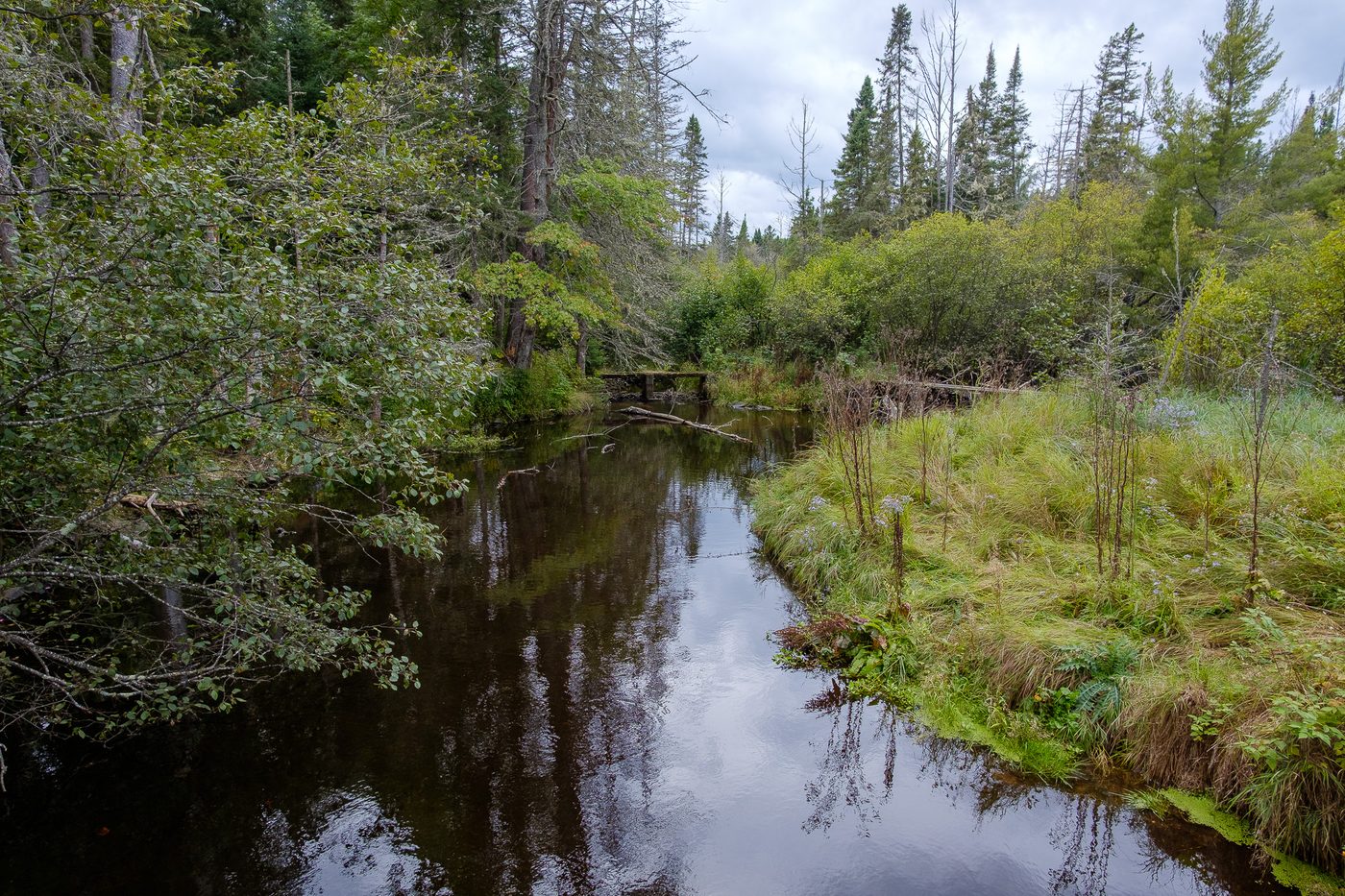
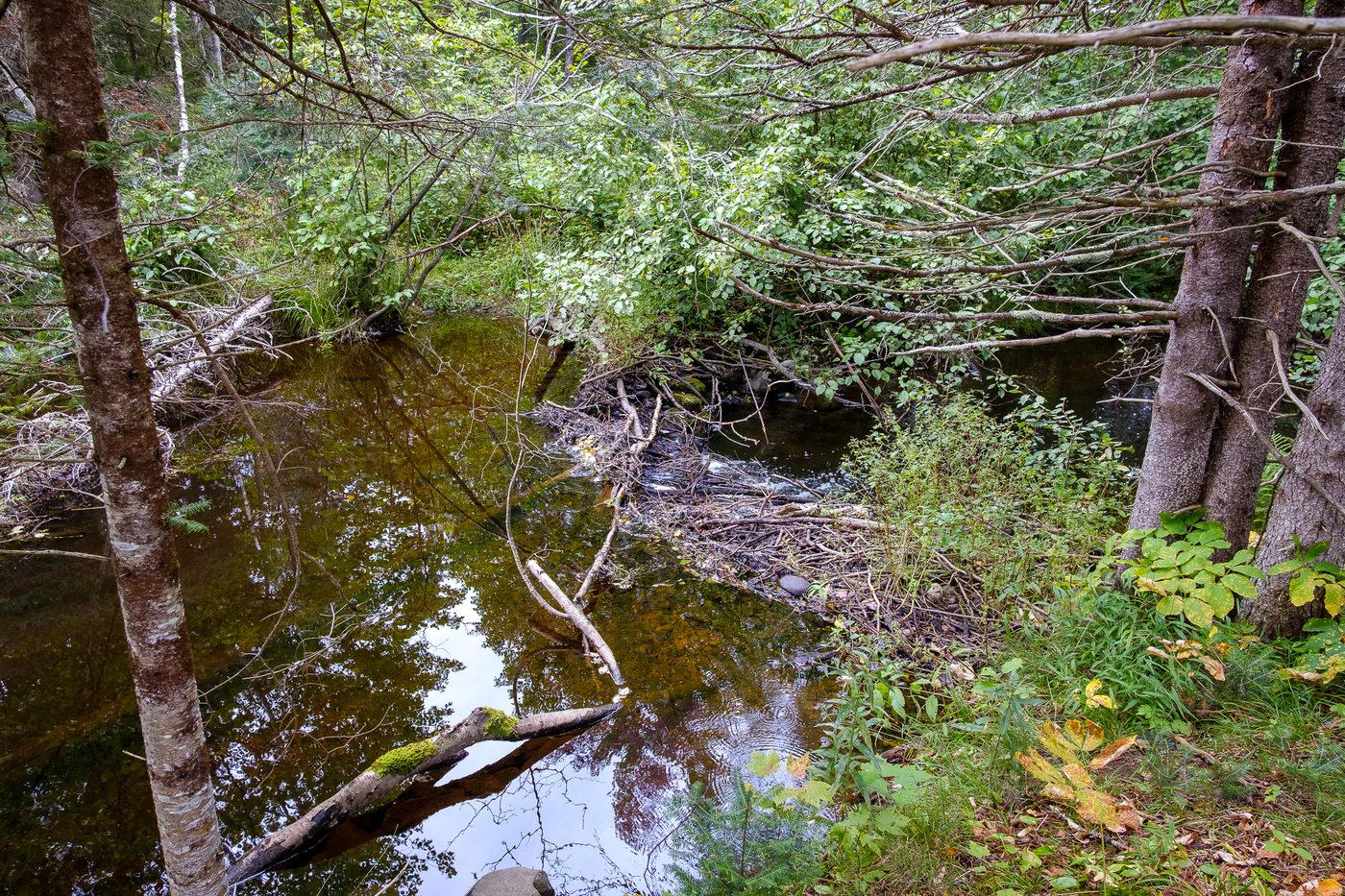
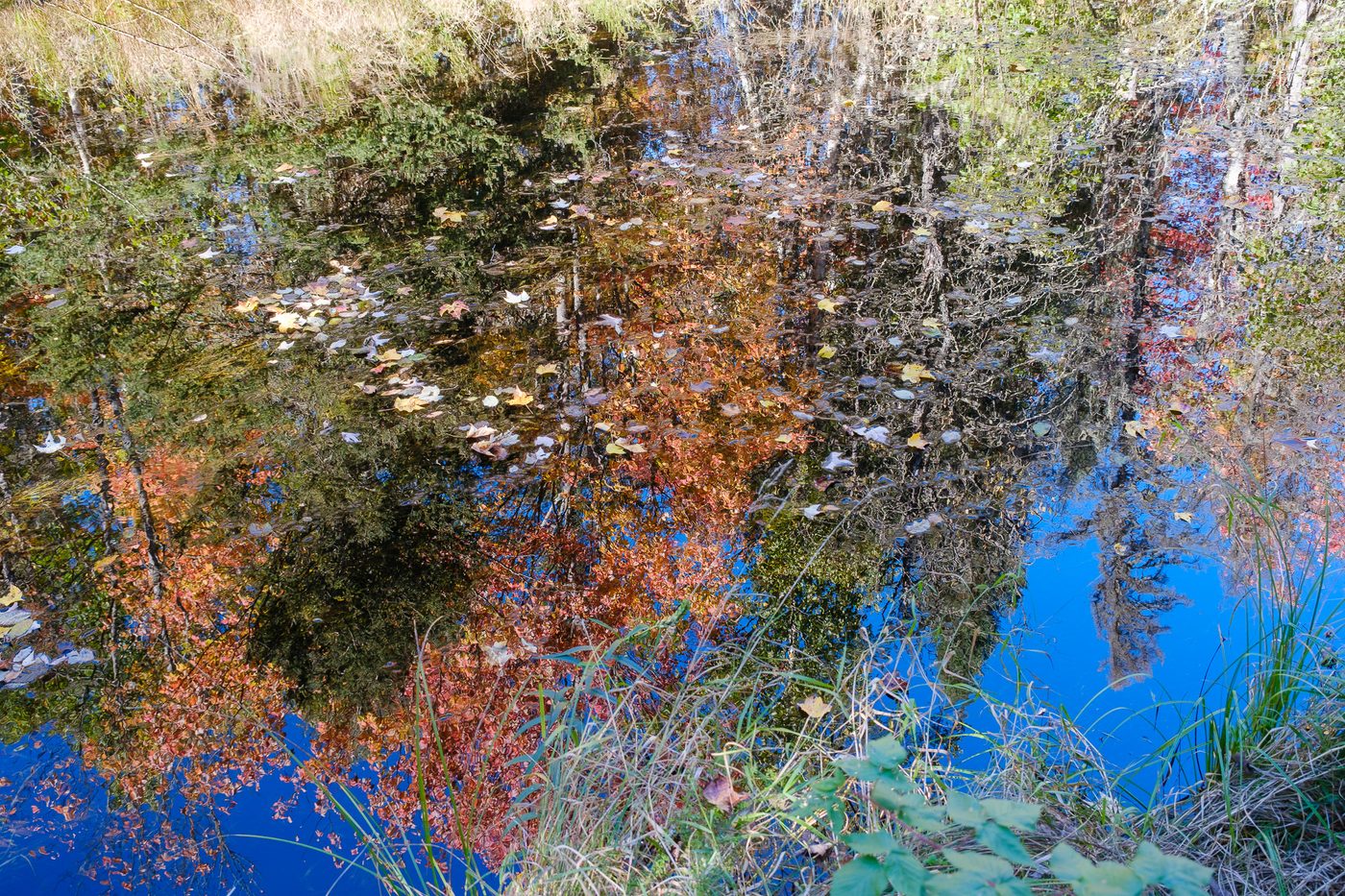
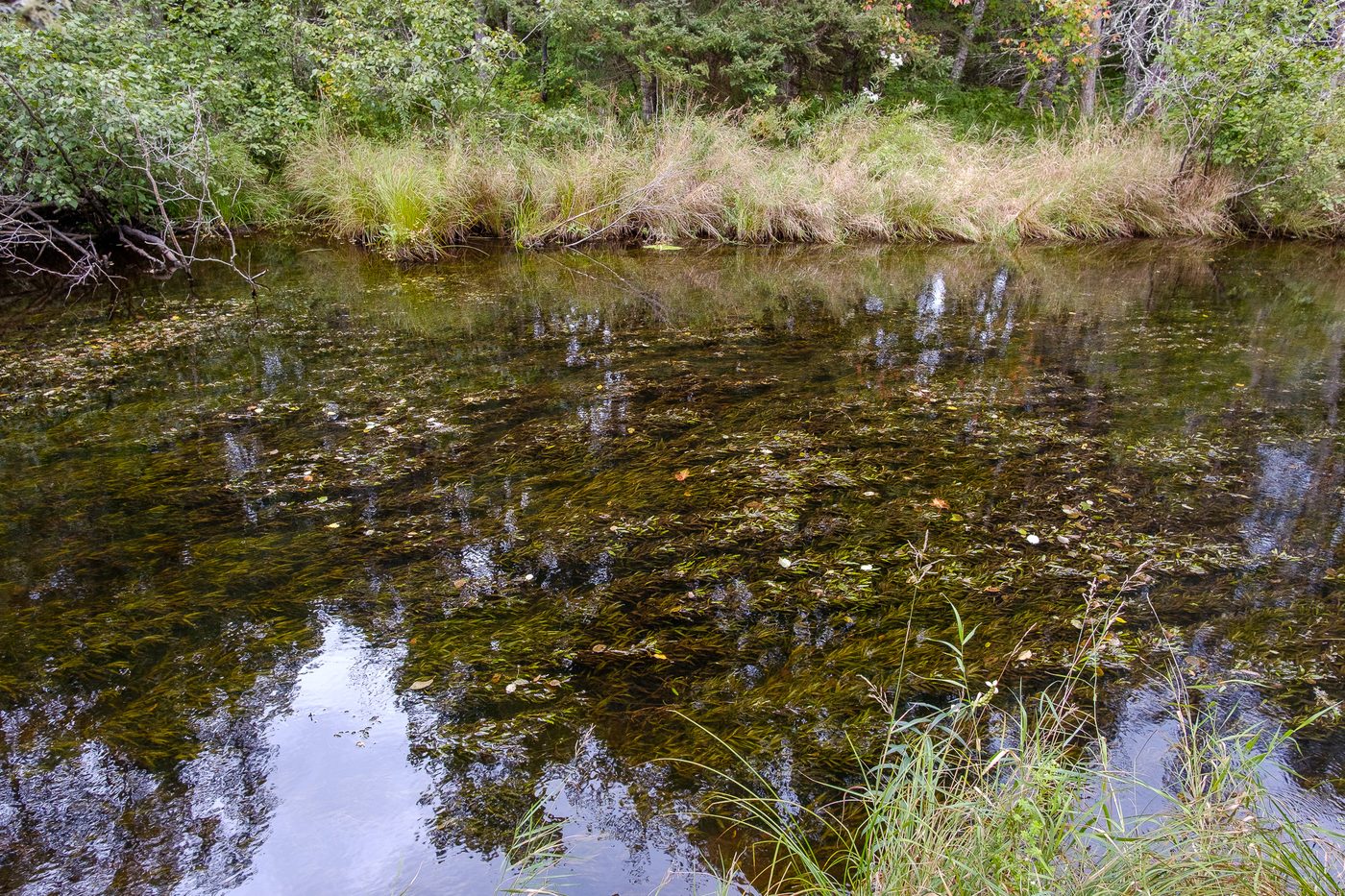
From the cabin, Cooks Run winds about five miles to the South Branch of the Paint River, and both are high-quality trout streams. Cold tributaries and shaded wetlands keep the water cold through the summer, which is what trout need to thrive and to hold their own against warm-water fish.
The Stream
Cooks Run is a Michigan Blue Ribbon trout stream: cold, clean and still raising wild brook trout, in a place most people drive past on US-2.
Blue Ribbon water
A trout stream worth protecting
2024–25 ecological assessment
What the study found
In 2024 White Water Associates of Amasa, Michigan, studied the stream around the old rearing station, funded by the Wilderness Shores Mitigation and Enhancement Fund. The question was whether the abandoned station was still harming Cooks Run. Their answer, in the report’s own words: the stream is “a high quality and productive coldwater stream,” and “from an ecological standpoint no restoration efforts are required.”
In plain terms: the water is as cold, clean and full of life as a trout stream should be, and it needs protecting more than fixing.
Spawning brook trout
Biologists saw spawning brook trout in several places in late fall 2024. Young sculpin, another coldwater fish, were found in the old diversion ditch, which shows they reproduce there.
Cold, oxygen-rich water
Temperature and oxygen loggers ran at seven sites from May through November 2024. The readings describe very good coldwater habitat.
Good habitat everywhere
Six of the seven sites rated “good” for stream habitat. The seventh, at the foot of the diversion ditch, rated “excellent.”
The old ditch is the best habitat
The diversion ditch the relief crews dug in the 1930s is now a permanent stream. Its steep, rocky bed oxygenates the water and gives trout the best spawning gravel on the property.
Springs and a wetland feed it
An unnamed tributary delivers cold, oxygen-rich water and a refuge in hot weather. A ten-acre wetland upstream adds no warm water.
Old dams do no harm
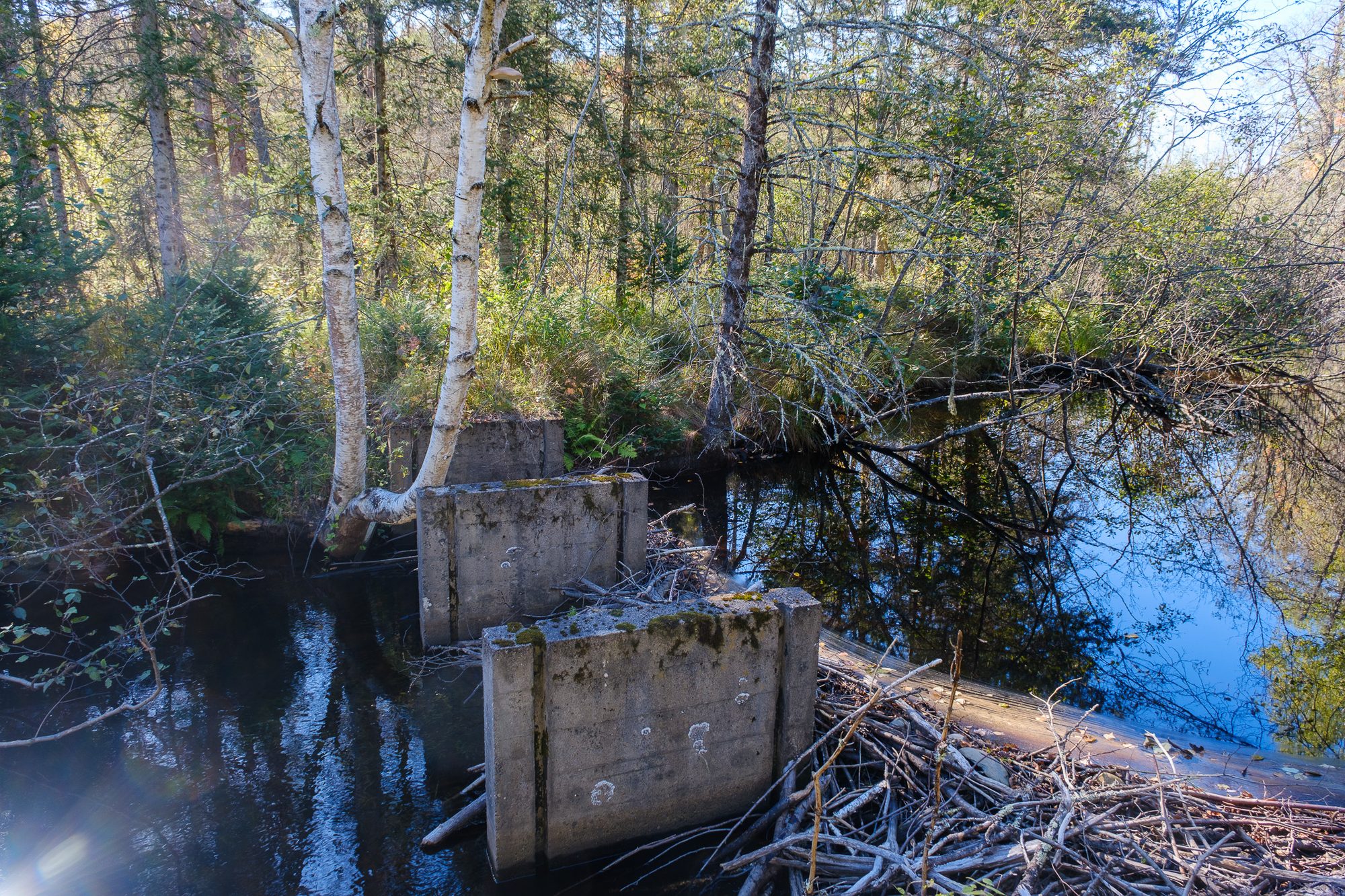
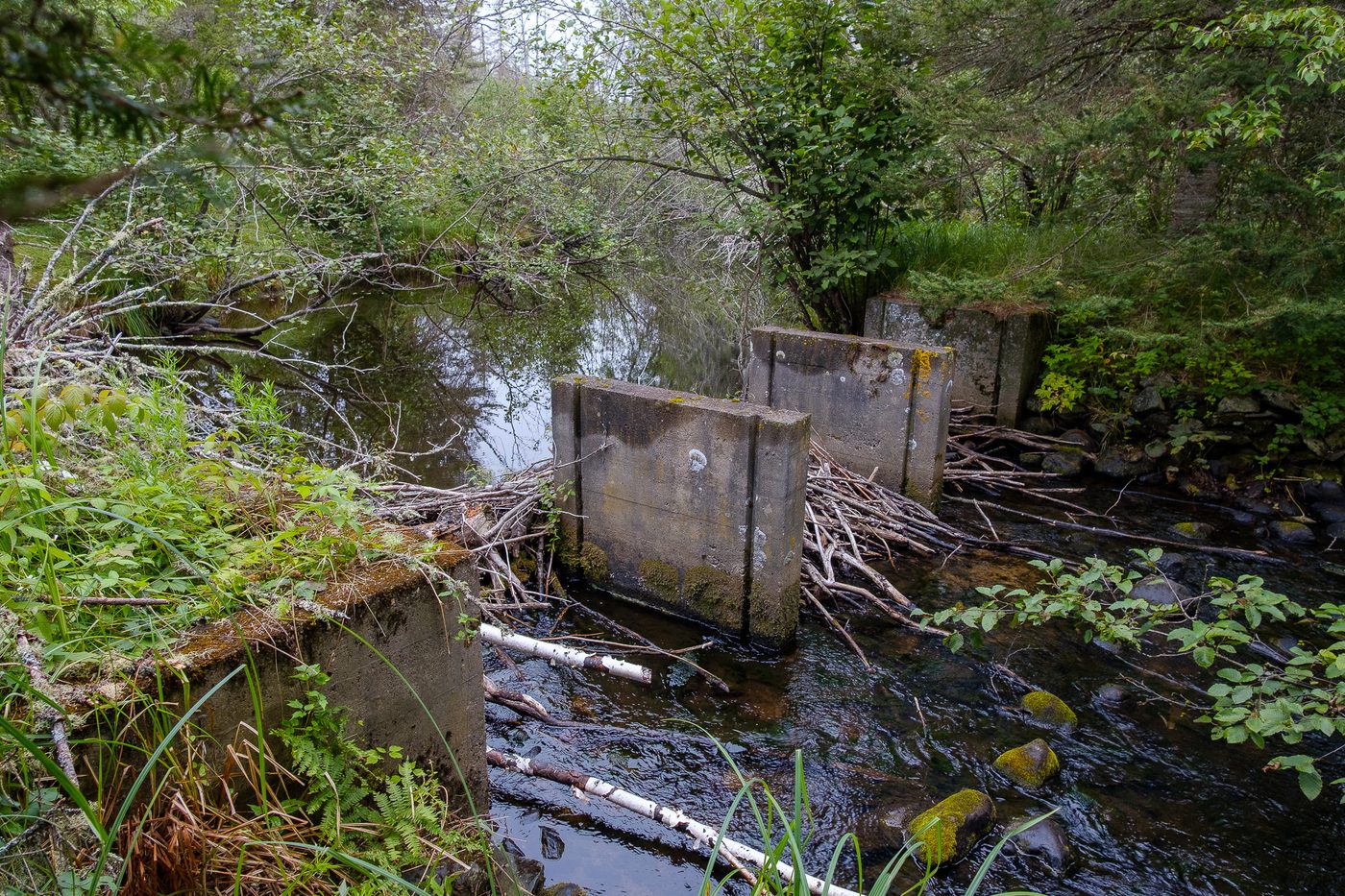
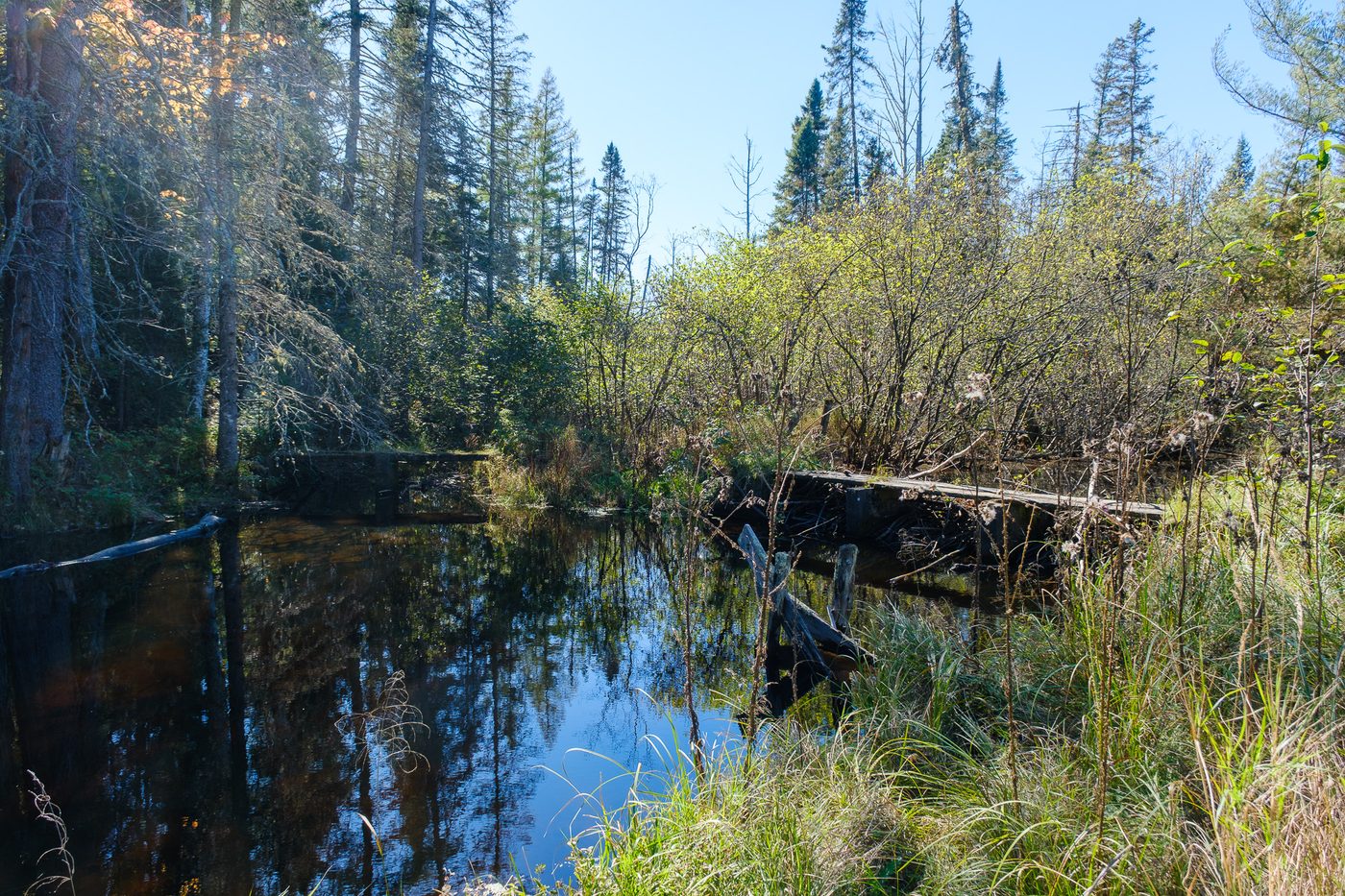
The concrete remnants of fourteen dams are ecologically neutral. They shelter fish, hold aquatic insects and could someday support footbridges or casting platforms.
The meadow reach
Where the stream slows down
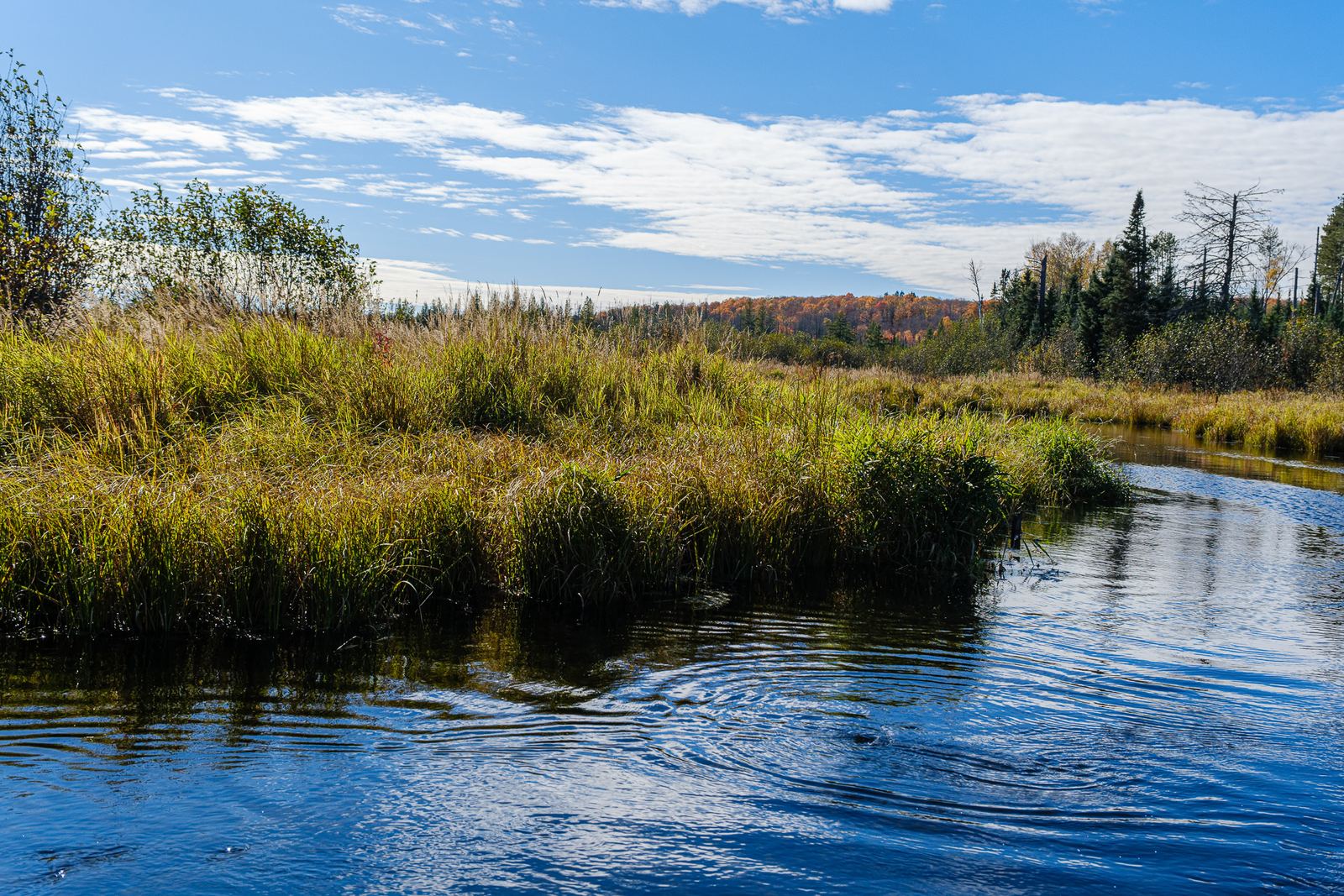
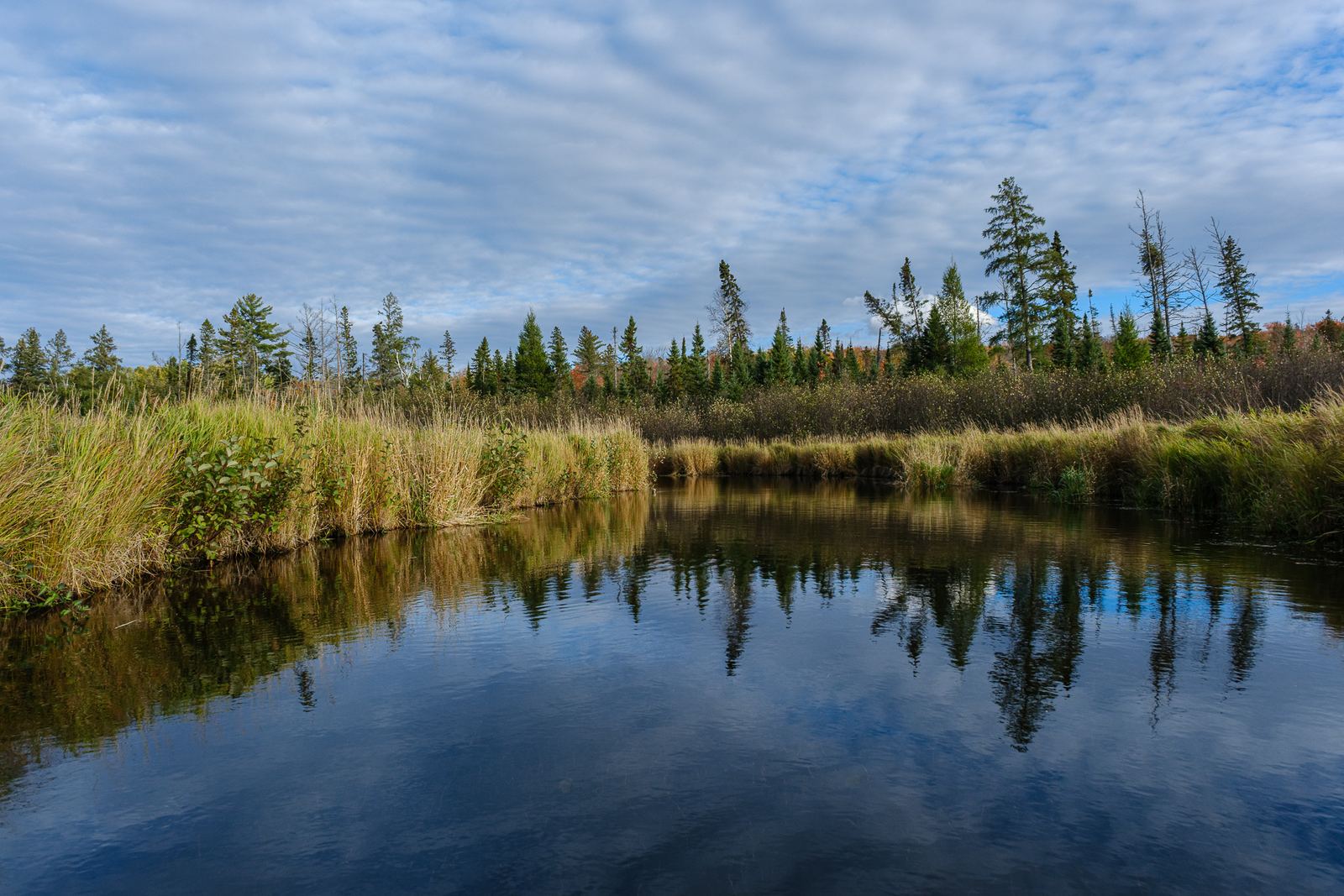
In its meadow reach Cooks Run slows and winds through open country, deep and quiet between banks of tall grass. Retired Michigan DNR fisheries biologist Bill Ziegler, who began working in the area in 1978, told the Iron County Board of Commissioners in September that “Cooks Run is a unique and special place.”
“People talk about [holy water] with great reverence.” After some light habitat work on the site, he said, “It reached much higher levels of trout population, diversity and density, than any of the streams in the holy water.”“Holy water” is DNR shorthand for the premier trout streams of northern Lower Michigan. Quoted from the Iron County Reporter. These are a biologist’s remarks, not a survey result, and the report below recommends a new fish survey.
What the report recommends
Protect the water, open the paths
The authors ask that the ten-acre wetland and the forested stream corridor be protected from harvest and other disturbance, and that the old concrete structures stay where they are. They also call the old roads an excellent base for a walking trail system, and suggest improving the path along the diversion ditch so visitors can see it.
They recommend a new fish survey, since the existing fish data are dated.
Ecological evaluation of the defunct Cooks Run Fish Hatchery and its influence on the stream
White Water Associates, Inc., final report, February 28, 2025.
Fish it, walk it, help look after it.
Cooks Run belongs to the people of Iron County. Join us for a workday or write to us at info@friendsofcooksrun.org.